Archive for the ‘Travel’ Category

Taylor Shellfish Farm: Oysters in Seattle

Posted 24 Jan 2012 — by S.E.
Category Food Alert Trends, Travel

I found the Taylor Shellfish Farm store quite by accident while driving around for a bit in Seattle. It all started half an hour earlier as I set out for the night and found my rental car battery dead. Mea culpa, I left the lights on by force of habit after exiting the last time I drove and this inexpensive choice of cars doesn’t have an automatic shut-off. Interesting fact that once we get used to assistive technologies like an automatic shut-off for your headlights they cause certain levels of mindfulness and judgment to weaken. Makes me wonder what other parts of my routine would be compromised should the supporting technology suddenly go missing. I make the call to road-side assistance and prepare for the annoying wait. After an hour a young guy hired by the rental car company arrives looking straight out of a Seattle grunge catalog in flannel shirt, olive drab knit woolen hat, torn jeans and worn hiking boots. His hands are greased over but his personality is service oriented and the kid is a tremendous help. He has the car recharged and running in less than five minutes while exuding a casual friendliness so common in this part of the country. After a few more minutes he takes off in his red two-wheel drive economy pickup proffering advice that I drive around for the next 15-20 minutes this rainy afternoon to charge the battery. Good advice indeed and this is the reason I stumbled upon Taylor Shellfish Farm in the 21st minute of my recharge drive.

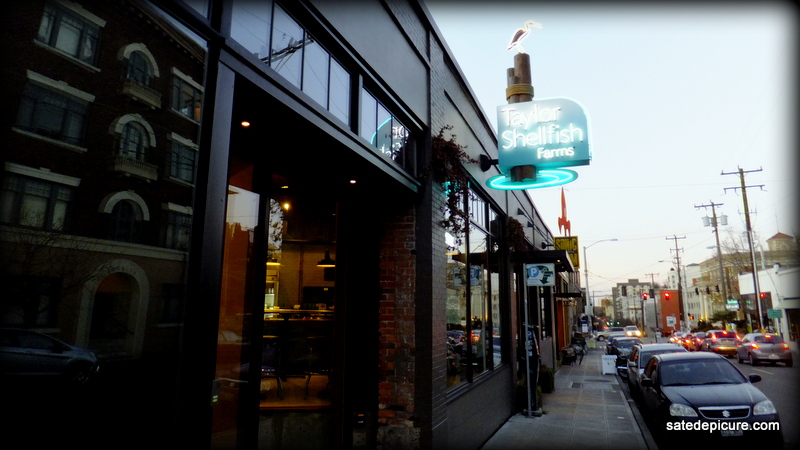
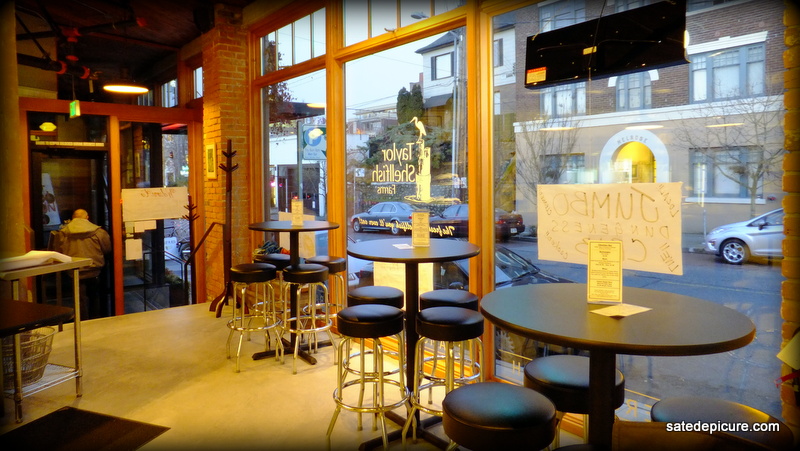
The blue neon sign in front initially caught my eye as I took a left off of Union Street onto Melrose. At first I drove right past peering in to see the place before circling back to park and take a closer look. Once inside it is immediately clear that the shop will provide an interesting excursion. For those of you who read this blog, you know that shellfish are a fascination. Modern shellfish farming has become a low impact, high value industry for seaside communities and a valuable benefit to marine ecosystems. Taylor has been in the business for more than 100 years and represents one of the better-known growers in the Pacific Northwest and the company has joing the growing ranks of seafood and shellfish companies that have opened their own restaurant and/or retail outlet. Island Creek has done this in Kenmore Square in Boston and Blount is about to open an outlet in Providence, Rhode Island.

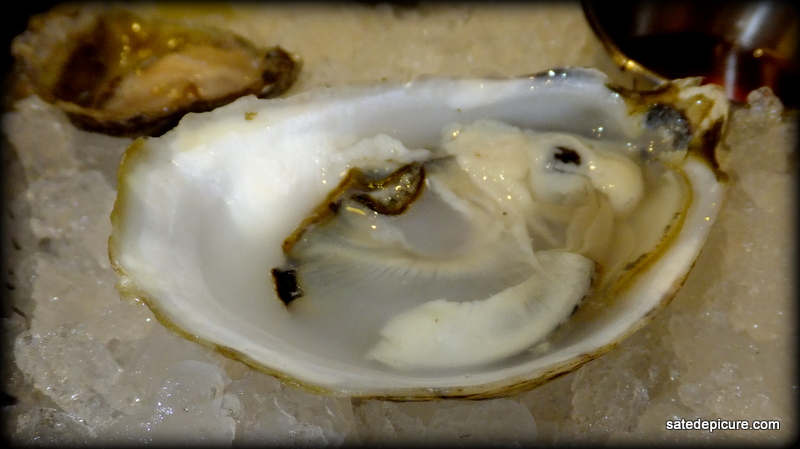
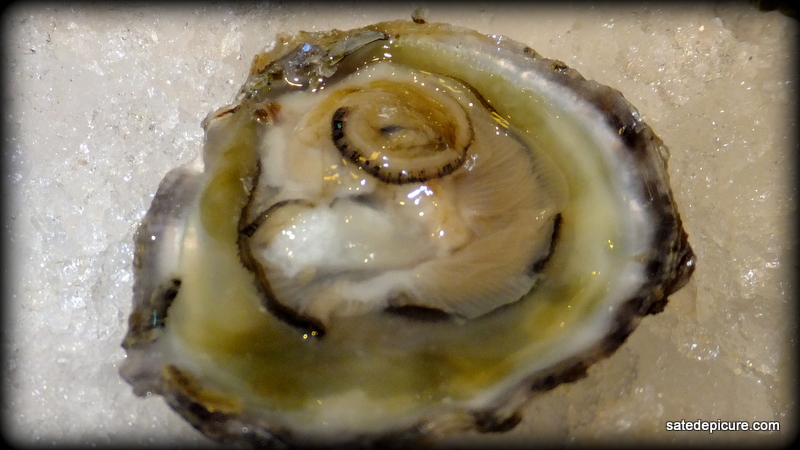
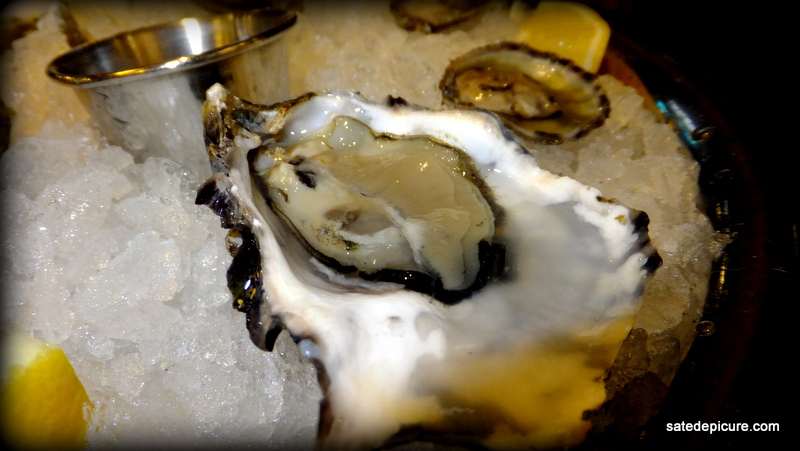
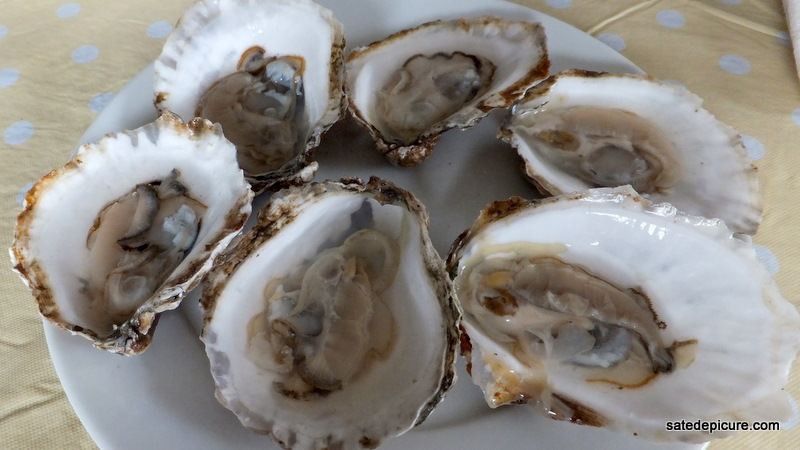
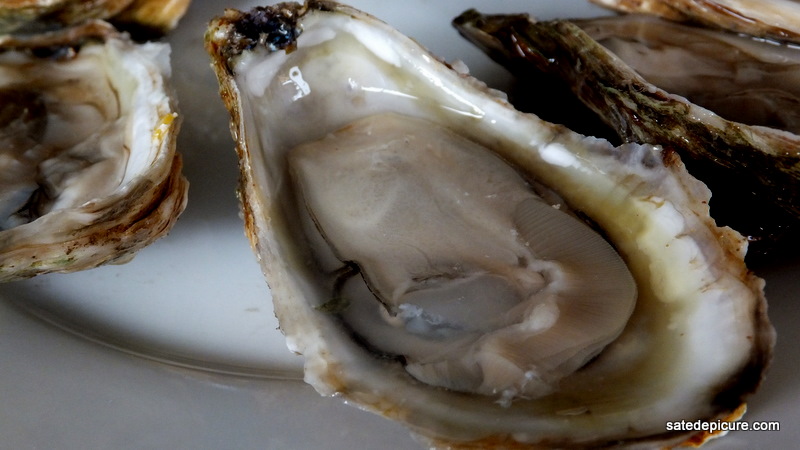
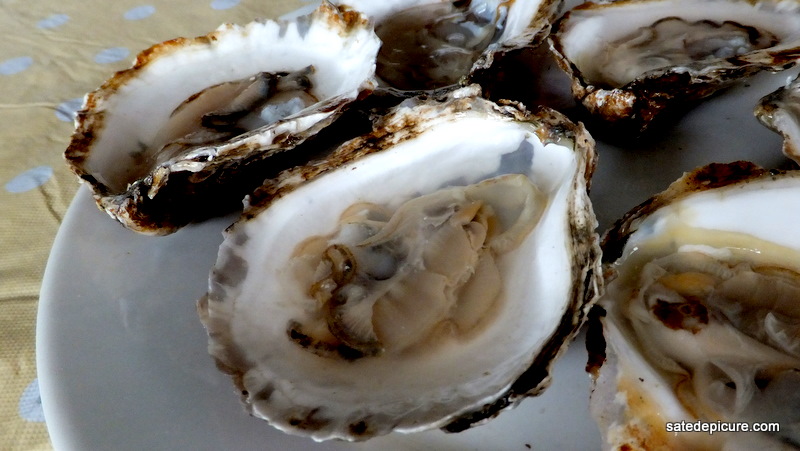
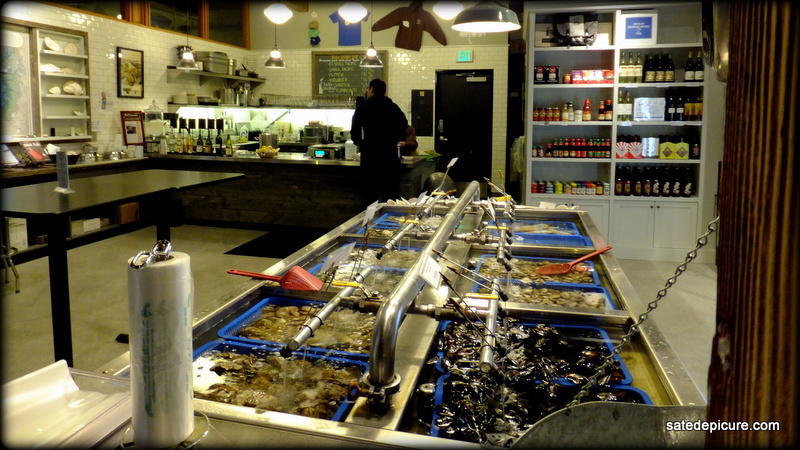
There’s a large stainless steel six-bay circulating salt water tank in the middle of the shop filled with six varieties of oysters, two types of clams and one bay dedicated to mussels. The circulating system uses ultra violet light to sterilize the circulating seawater keeping the system bacteria free and the oysters, clams, and mussels happy. I grab the attention of the manager and we select a half-dozen oysters. He advises to try two Totten Inlet, two Olympia, and two Shigoku as a start. The Totten inlets are large and have a dark-lipped jagged shell. Straight from the tank, each is ice cold and full of liquor. At first slurp I get a nice sweet and briny oyster flavor and a slight bit of tannin in the finish. Next I try the Shigoku’s. Each has a deep shell with a smooth white lip. These are similar in flavor to the Totten Inlets but they have a higher percentage of liquor and a sweeter finish. Finally, I sample the tiny little Olympia’s with the silvery flesh and curling adductor muscle. These have a deep, creamy almost browned butter flavor with a quick follow of copper and tannin. Tiny and less physically satisfying than the larger Totten Inlets and Shigoku’s the Olympia’s packs nearly twice the flavor. Freshness is outstanding and I am ready for more but time has run out and I have to move along. Walking to the car, I am thankful that the battery went dead earlier since the chain of events afterward resulted in my stumbling upon Taylor Shellfish Farm’s retail store.  

Shigoku Oyster

Olympia Oyster

Totten Inlet Oyster

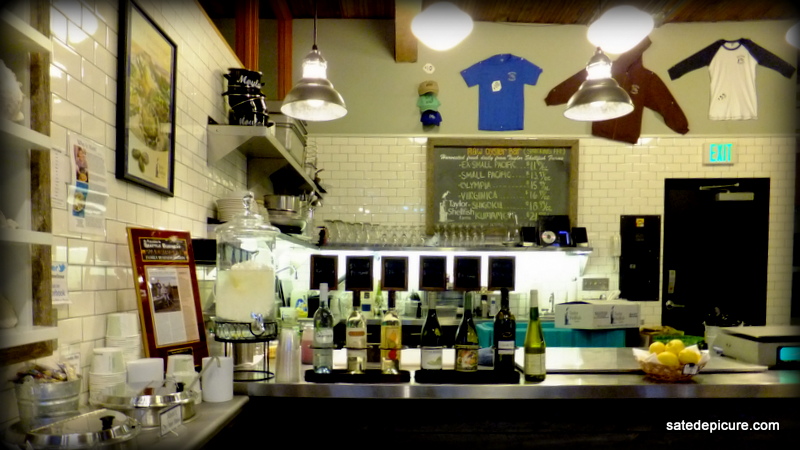
Taylor Retail Counter

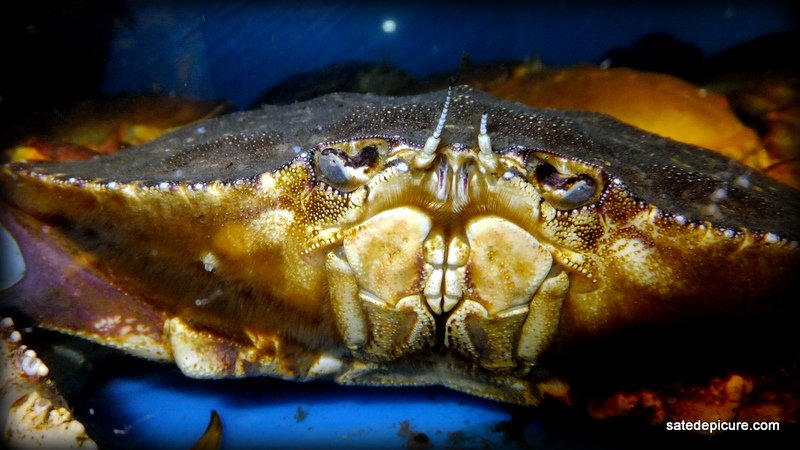
Dungeness Crab Looking At You!

Taylor Shellfish Seattle Melrose Market

1521 Melrose Ave,

Seattle, WA

(206) 501-4321

The Home Port ~ Martha’s Vineyard

Posted 16 Aug 2011 — by S.E.
Category Full Service, Travel, Warms My Heart

You would think that sustainable seafood is a focus on Martha’s Vineyard but it isn’t, at least not to the extent it should be. Some restaurants, more than a few in fact, offer a sustainable choice or two but there are few if any as dedicated to sustainable seafood as The Home Port restaurant in the sleepy little fishing village of Menemsha located on the lower west side of this triangle shaped island. Don’t get me wrong, there are good restaurants on the island and some of them offer a sustainable seafood choice or two but none have integrated sustainable seafood into the operation in a manner that even comes close to The Home Port.

The Home Port Restaurant Back Deck, Menemsha, MA

The Home Port is an institution. In business since 1930, it’s a beloved landmark and family dining destination. Situated just on the eastern side of Menemsha harbor The Home Port faces south west offering deck side diners a view of one of the nicest sunsets on the east coast. My first visit here was twenty years ago and nothing about the restaurant has changed….except the menu.

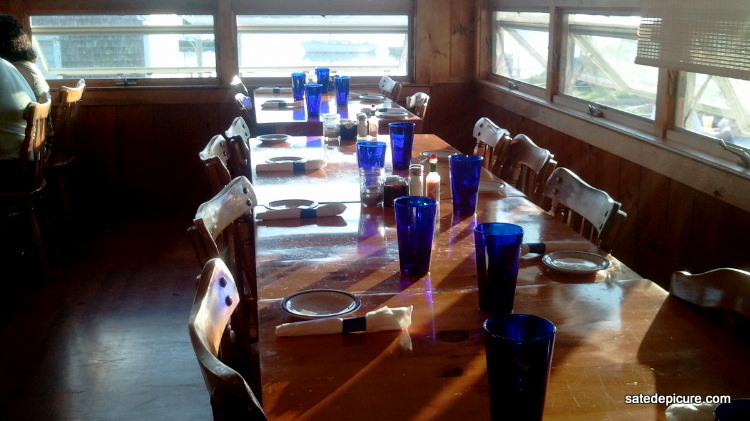
Dining Room with Blue Glasses

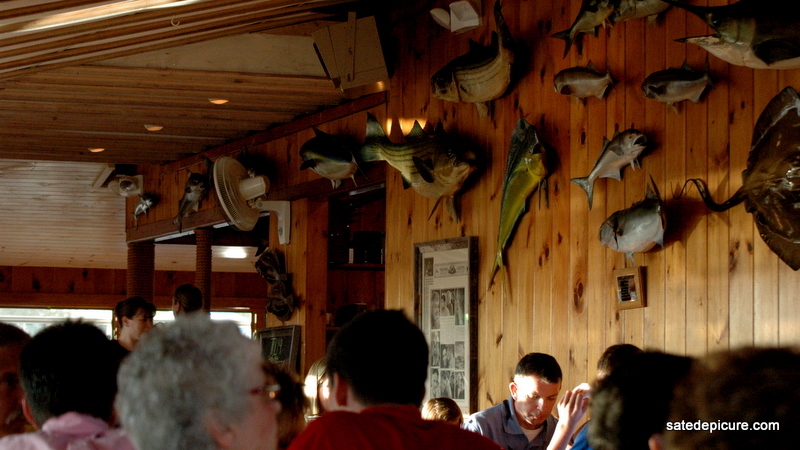
I arrive in a group of four and a smiling college-age server leads us over to a table along the far wall along a bank of windows. She takes a quick beverage order (The Home Port is BYOB) and departs for a few seconds while we settle in. The sun is hanging low over the horizon painting the interior of the restaurant in light orange and yellow. Tables are hard pine and maple as are the walls and trim that compliment solid wooden chairs with just the right patina for a restaurant this old. The flatware and china are simple and you won’t find table linens or cloth napkins here.  This is the type of place where, when eating a lobster, you wear a goofy plastic bib printed with a step-by-step set of instructions for how to eat it (you know the one). No pretension here. Dozens of fish, well preserved by a taxidermist, line an entire wooden wall.  It’s such a wonderful, bright, warm and inviting dining room and I love being here.

Customers Under Taxidermied Fish

For years the Mayhew family (a Vineyard institution in and of themselves) ran The Home Port. More recently, for 32 years until 2009 to be precise, Will Holtham owned and operated the restaurant. Holtham, author of the just released Home Port Cookbook, decided to sell in 2009 and the Town of Chilmark proposed purchasing it for cool $2,000,000 so they could demolish it in the name of progress…a parking lot and public bathrooms. Enter a counter offer from Bob and Sara Nixon, owners of the Menesha and Beach Plum Inns. After a quick vote by the residents of the Town of Chilmark, the Nixon’s saved The Home Port and Holtham was on his way into retirement, cash, recipes and cookbook deal in hand.

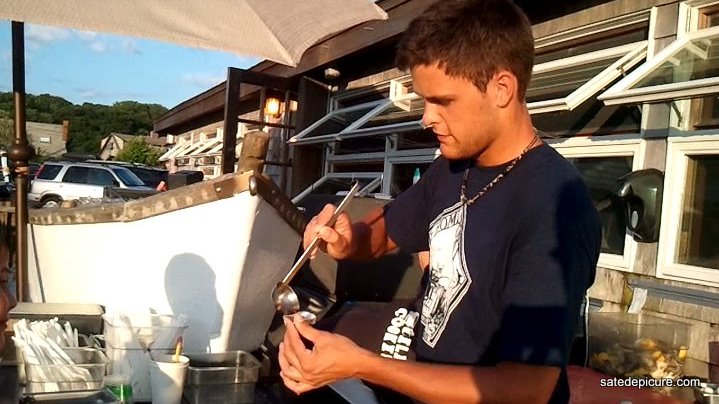
Oysters on the Back Deck

After becoming involved with the local Fisherman’s Association Sara announced on May 27th, 2011 that The Home Port would only serve locally caught fish. By locally caught, she means fish that are caught in the coastal waters surrounding the island and landed on local docks.  I love it (go Sarah)! No one on the island is as deeply committed to sustainable seafood as Sarah and Bob and they changed their business model to prove it. This is why I am here.

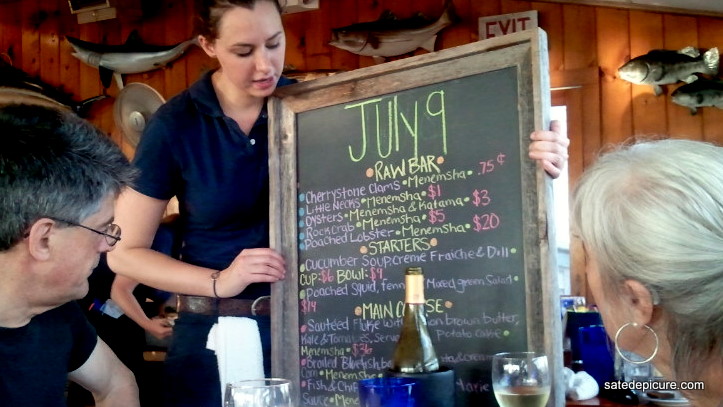
Server With Specials

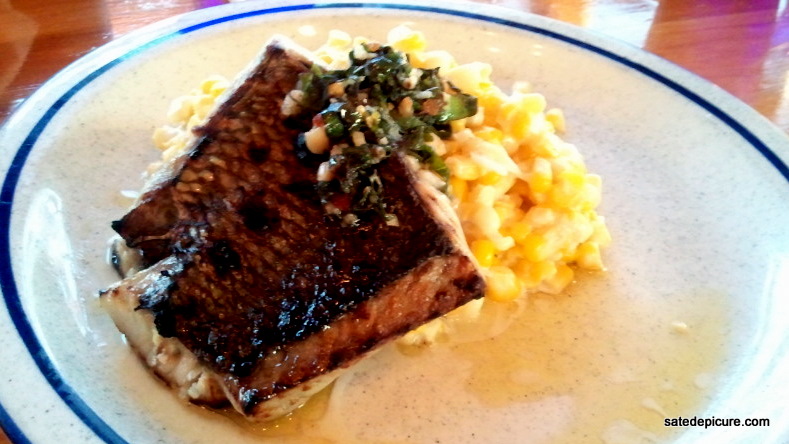
My server is back and she presents the table with a medium sized chalk board that lists all the specials for the evening. The Cherry Stones and Little Necks are from Menemsha (delicious), the Oysters are from Katama (exquisite), the Fluke, Bluefish and Squid are from Menemsha too. I order the bluefish with creamed corn just to give it a shot. To my delight, the fish is absolutely delicious and perfectly cooked. Bluefish is great but is has to be perfectly fresh, the fish has no shelf life. It’s best when seared or broiled hot with the skin intact, scales removed, since the flesh cooks quickly and falls apart easily. My fish had the skin intact, was crispy on the top and moist in the middle. Most people think of bluefish as a trash fish but when served correctly like this, it’s wonderful. I also have a taste of the local fluke and, although presented
simply (almost too simply) it too is perfectly cooked and well seasoned if not a bit ugly.

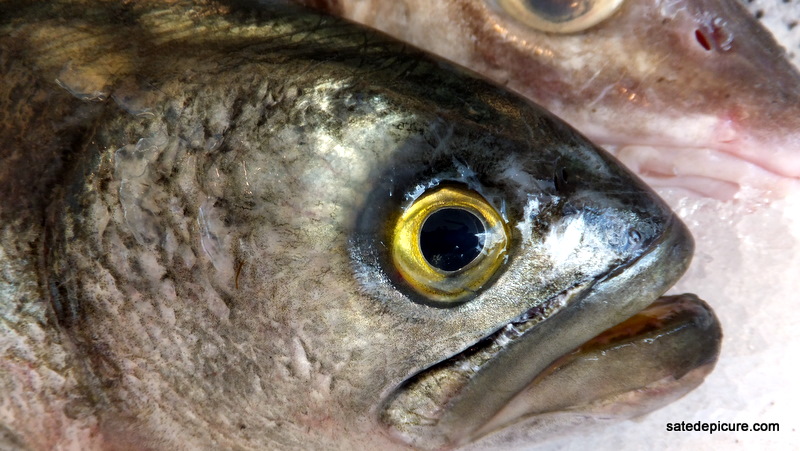
Blue Fish Looking at You

As I said before, The Home Port serves simple food. You won’t find the latest culinary trend or the most outrageous presentations in the world but you will find good and, better yet, local fish served properly cooked and well seasoned. Arrive just before sunset, sit on the back deck, bring your own booze and order one of the local sustainable seafood items. Enjoy!

Sautéed Fluke with Lemon Brown Butter, Kale and Local
Tomatoes, Boiled Potatoes

Broiled Bluefish with Parsley Butter and Local Creamed Corn

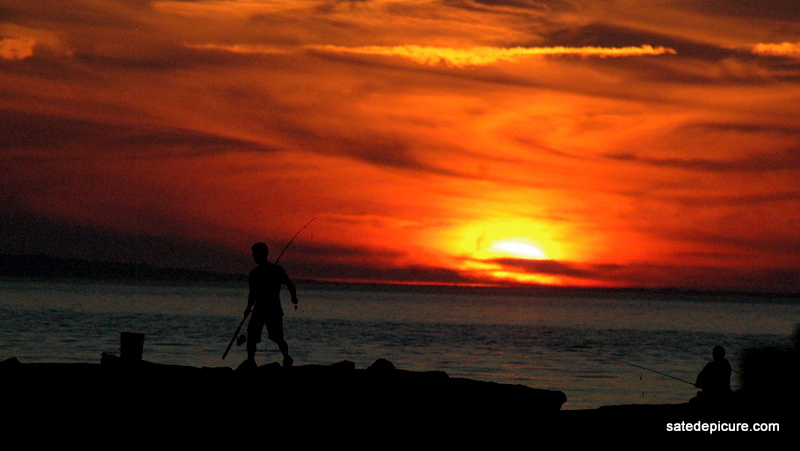
Menemsha Sunset

The Home Port Restaurant

512 North Road

Menemsha, MA 02252

(508) 645-2679

Louie’s Back Yard ~ Key West, FL

Posted 08 Aug 2011 — by S.E.
Category Fine Dining, Travel

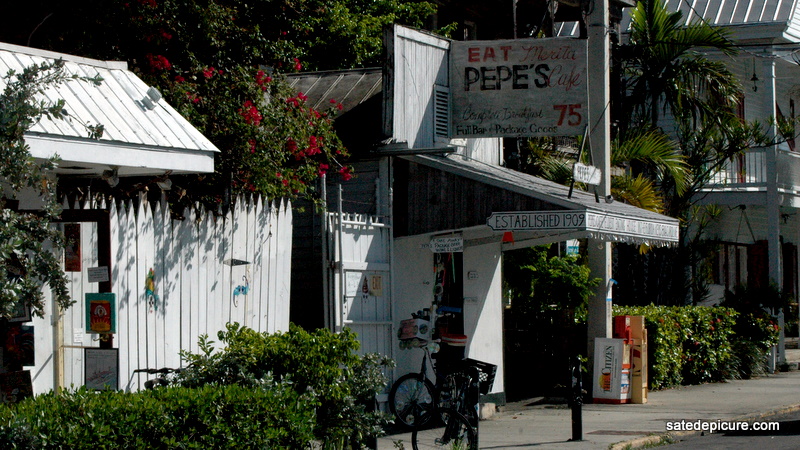
Pepe’s Restaurant circa 1909

Arriving in Key West, I research the local restaurant scene and make some decisions about where to go. A couple of restaurants attract my interest but, to be honest, I am just as exited to take some time and wander around town having last been here more than five years ago. I like the Key’s, the local pink shrimp, Jimmy Buffet, Ernest Hemingway, and treasure hunter Mel Fisher. The great many free spirits that call the Conch Republic home add texture and because of them Key West always provides for something unusual or unexpected. Stepping out of the steaming hot rental car, I am punched in the face by the humidity and heat. I need a cold drink. That’s how things start in Key West; the heat naturally forces you to find a cold drink and soon enough things are loosened up. Time to find a watering hole and some vittles.
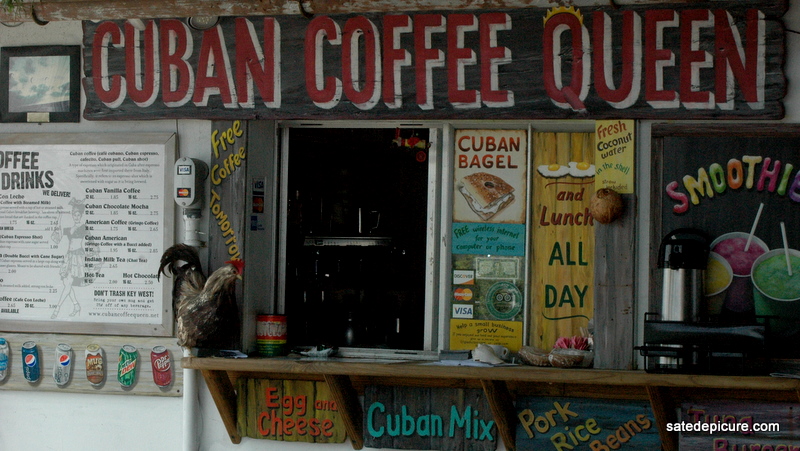
Key West Cuban Coffee Queen

Prior to driving to lunch I roll over to Caroline Street for a Cuban Coffee on ice to accompany me while I drive. The Cuban Coffee Queen serves the best coffee and Panini sandwiches on the island and it’s still early enough for another cup. Plus, the location is nice for a short stroll. There are souvenir shops right next to the Coffee Queen with just the kind of strange, cheap, waste-of-money things that captivate me. Further down on the waterfront huge tarpon roll underneath the docks and perform if you toss some bait into the water.  Right across the street from the queen is Pepe’s restaurant, one of the oldest in Key West. One quick stop for coffee and I am starting to feel settled into a Key West groove and ready to eat.
Coconut Pirates Heads ~ Tourist Trap on Waterfront

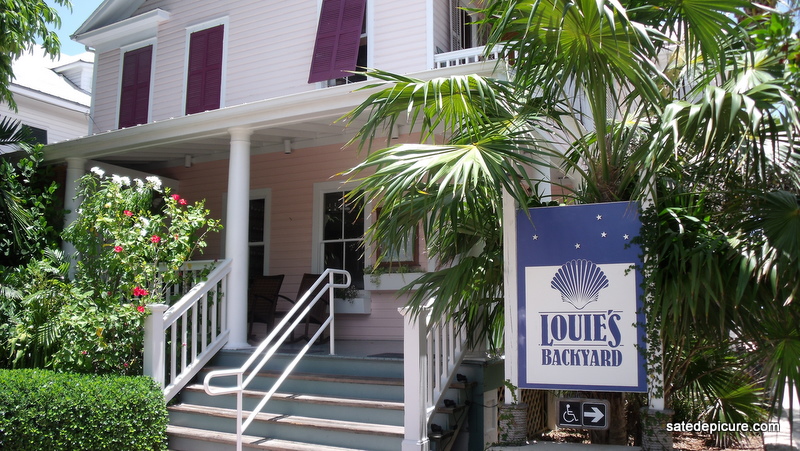
Key West has always had good restaurants. On this trip, I am looking for an established place to eat not the most recent or trendiest. It doesn’t take long for me to head to Louie’s Back Yard. In addition to chasing a cold drink and some food, the other reason I am at Louie’s Back Yard is so I can sit on the back deck and soak in the vibe just like Chef Norman Van Aken did back in 1987. I even selected the time of day to approximate Norman’s experience as closely as possible; Norman had his epiphany while sitting on the deck during the morning. You see, Norman Van Aken, a chef who I have admired for more than 25 years and the one, who arguably gave birth to what we recognize as the regional cuisine of south Florida, was the chef at Louie’s Back Yard back in 1987. It was just five years after Pat and Phil Tenney bought the place and renovated it in 1982 that Norman decided to shift his culinary focus to a Nuevo Cuban
cuisine.

Louie’s Back Yard

It didn’t take long or people to notice. Under Van Aken’s watch, a young Charlie Trotter ventured own to the Keys and spent a season in the kitchen earning his stripes in the Conch Republic. Trotter points to this time with Van Aken as critical to his own culinary development and focus. Twenty five years later and I am sitting on the back deck, ice cold beverage in hand, enjoying a light breeze. Although I don’t expect to find anything new or earth shattering at Louie’s or major urban technical cuisine this far into seasonal tourist territory, I know the food is good and the restaurant has made its mark on American regional cuisine.

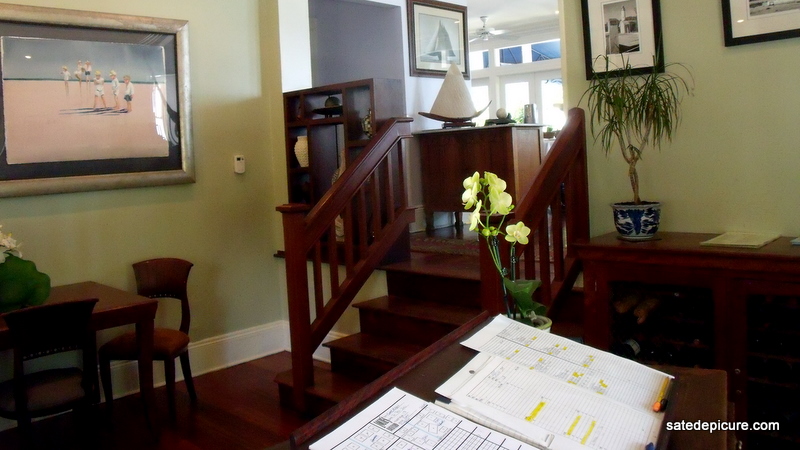
Louie’s Back Yard Interior

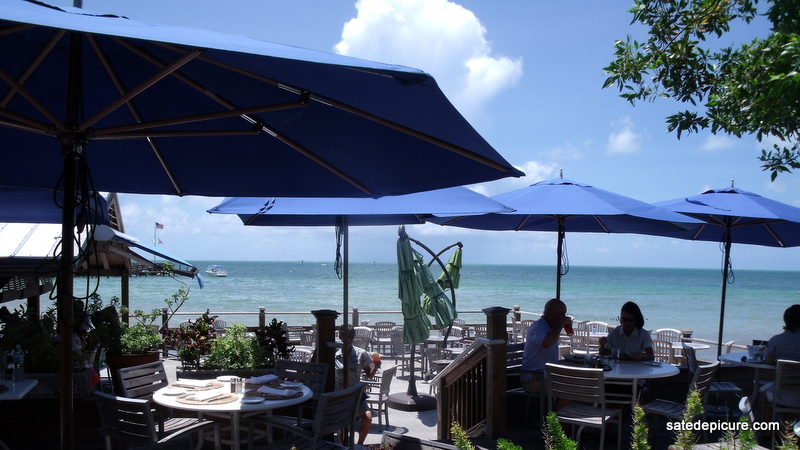
Back in January 2011 the New York Times published a “36 hours in” article on Key West and mentioned Louie’s as a perfect place for a cold cocktail comparing it to an “outdoor Cheers” with a crowd of artists and displaced New Englanders escaping the cold. Today, the deck is nearly empty because it’s so hot but people appear to be enjoying themselves. The view is stunning and service is sound if not slowed a bit because of the heat.  Rather than fuss I order the daily fish special and then screen the menu for the most unusual thing I can find.

Louie’s Back Yard Deck

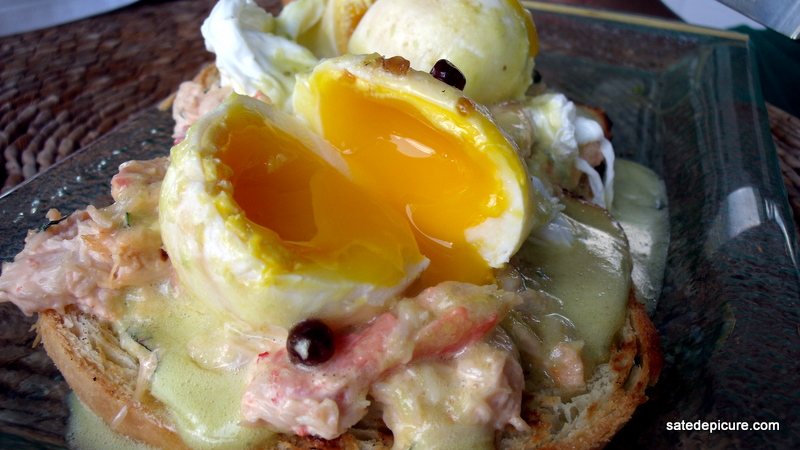
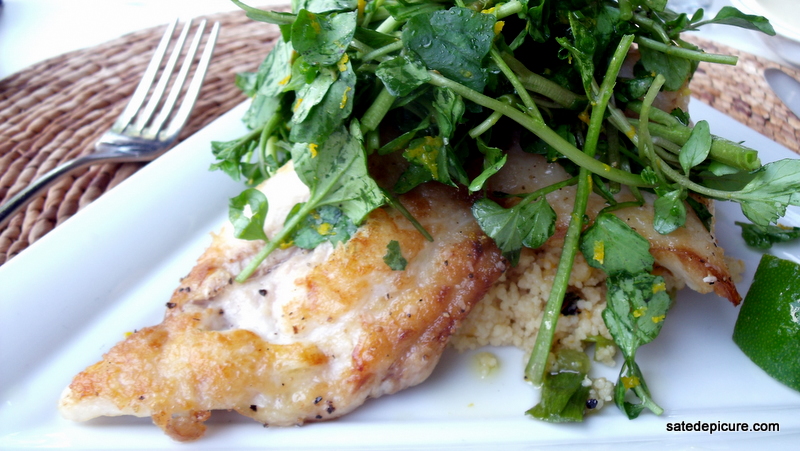
The special is straight out of Norman Van Aken’s play book consisting of a sautéed Yellow Tail Snapper over grilled peach cous cous with watercress salad. Simply prepared and presented, this dish is correctly cooked and delicious. It is also light as a feather and just the kind of entrée for the weather. The other dish I order is a bid odd but certainly interesting. It consists of two large poached duck eggs drizzled with wasabi hollandaise on toast topped with crab legs. Small round soy pearls are sprinkled over the top of the dish as garnish. This is not a dish Norman would have served nor one that quite fits my image of Louie’s but the draw of modernist cuisine goes far and wide; all the way down to Key West I guess. The Snapper is a winner, the duck eggs are tasty but don’t fit my preconceived notion of Key West cuisine. Still, Louie’s Back Yard remains worth the trip and the traditional dishes on the menu are outstanding. The restaurant is extremely well maintained and is a standout compared to many in Key West and the service crew is dedicated and professional, another unique feature compared to other restaurants in the Keys.


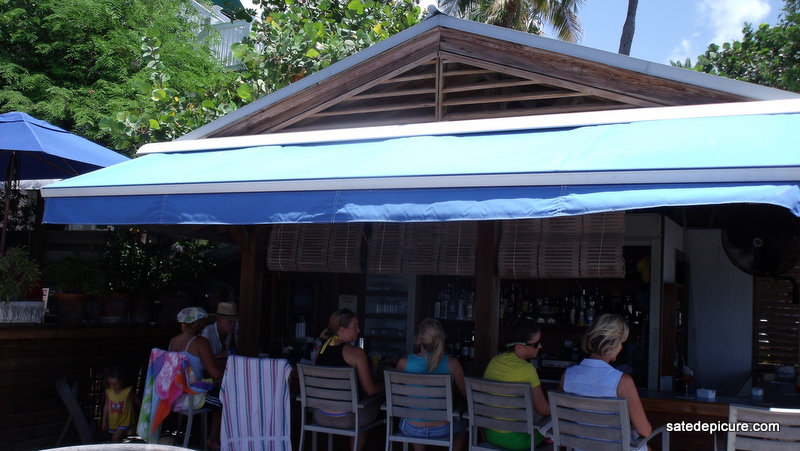
Louie’s Back Yard Bar

It’s just past mid-day now, I am finished eating and wander down to the deck bar and grab a seat in the shade facing the ocean. Although I wonder if Hemingway ever visited this house, I am sure that Van Aken did and that his presence can still be felt here all these years later.


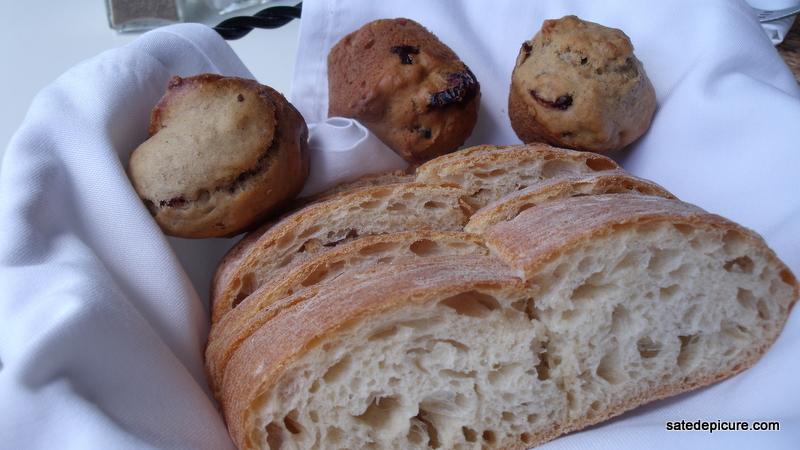
Ciabatta, Dried Cranberry Nut Muffins


Sweet Crab and Duck Eggs Benedict with Wasabi Hollandaise and Soy
Pearls


Sautéed Yellow Tail Snapper over Grilled Peach Cous Cous with
Watercress Salad


Louie’s Back Yard

700 Waddell Ave

Key West, FL

305-294-1061

Freemon’s General Store: Creede Colorado

Posted 11 Jun 2011 — by S.E.
Category Travel, Warms My Heart

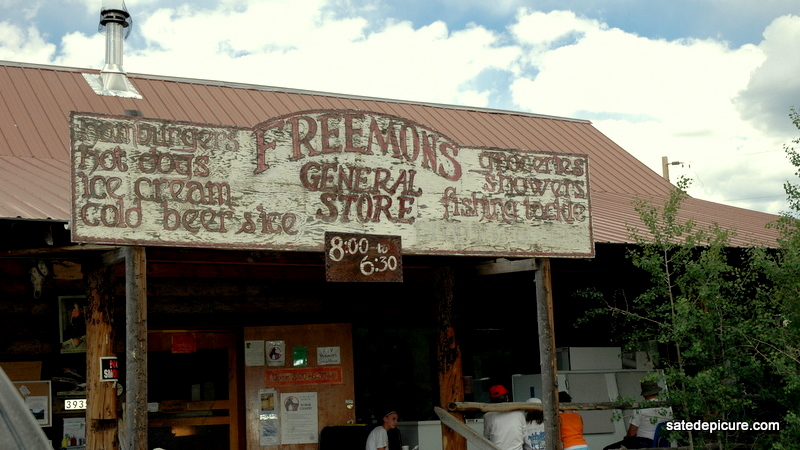
Sometimes a meal is more about emotion, peolpe, and place than it is about the food. As a professional chef, I know how emoion plays into an overall food experience. Perhaps this is why Freemon’s, to me, serves the best burger in Colorado. Tucked away outside the small mining town of Creede, Freemon’s is a seasonal mom and pop restaurant, general store, ice cream parlor and tackle shop that is known mostly to locals. Early summer is the best time to go.

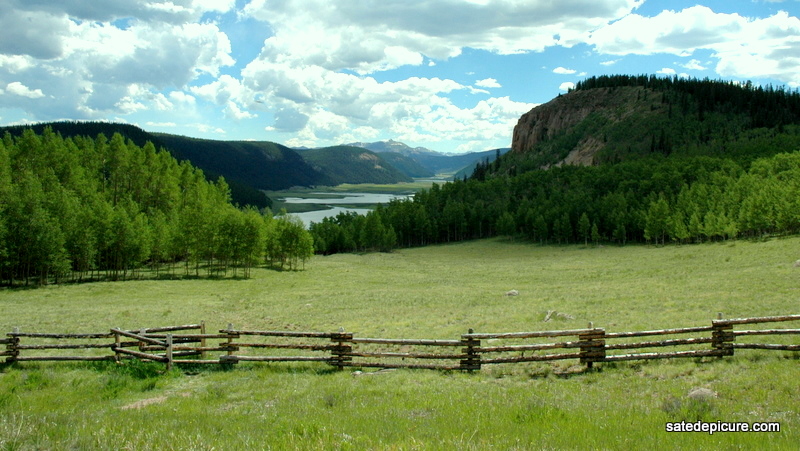
Outside, the grass is still green at this altitude but the air is getting hot so we have the windows up and air conditioner on as we drive north. Later in the summer, this part of Colorado will dry out and the grass will become parched and brown but today the scenery is green and bright. Eve is driving us to lunch in her enormous black Suburban. Buddy the neurotic Border collie is in the back glaring though nose-smudged rear windows at the occasional rabbit or marmot scurrying in the underbrush, odd alien sounding whimpers rising in his throat at each sighting. Freemon’s is just minutes away now and my mind begins to wander as I think about Eve and how gracious it is that she is taking me to the place where she used to go regularly with her late husband Billy.

Rio Grande National Forest

Eve owns a cabin in this part of the state that she built years ago with Billy.  They had planned to fully retire and spend time here in the twilight of their lives until Billy, aged 74, fell to a bad case of cancer. Actually, it wasn’t the cancer that killed him it was the surgery that did him in. He was one of those New Mexico cowboys with a western drawl, Wrangler jeans, tan Resistol hat, and big silver belt buckle inlaid with turquoise. He was tough in a John Wayne sort of way but uniquely intellectual with a Ph.D., in French Literature. I used to kid him about his inability to control his drawl as he spoke French. Although fluent, he sounded like a cross between Ross Perot and inspector Clouseau. She loved him deeply, he loved her, and together they visited Freemon’s on a weekly basis. Eve invited be to the cabin for a visit and to lunch knowing I would make the trip.

Freemon’s Screen Door

Earlier today we met at the cabin so I could park my car and drive with her. Walking across the front porch of the cabin, Buddy has a melt-down at the front door and is exiled to the back yard so I can enter. We sit in the living room for a few minutes, large windows radiating Colorado sunshine through the panoramic windows facing north toward the Rio Grande National forest. There’s a white Resistol cowboy hat on the end table by the sofa and Eve hands it to me. “I want you to have this. You know we never had any kids and he would have liked you to have this. He always liked you” she says. I always liked him too and my eye’s wet with tears of humility as I take Billy’s hat and put it on my head. Oddly, it fits perfectly. She smiles, rubbing the small of my back as we head out the door.

Dry Goods

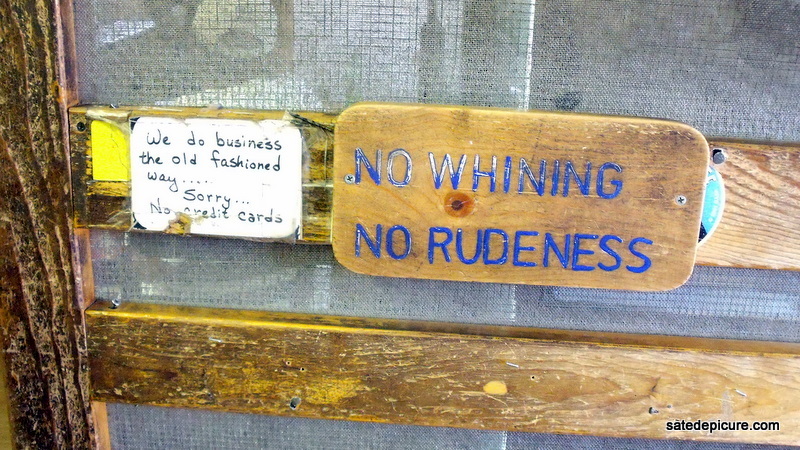
We pull into the dirt parking lot at Freemon’s in a cloud of dust, jump out leaving Buddy in the car (with the windows cracked open) and climb the worn wooden steps up to the entry. I pull open the spring-loaded screen door for Eve and follow her in as the screen door claps closed behind us. As the door swings closed I notice a small sign below the handle to the door with blue lettering reading “no wining, no rudeness” and an index card taped next to it reading “we do business the old fashioned way…sorry no credit cards.” Once inside a steady stream of locals approach Eve, greeting her and engaging in brief conversation. They all know her. It’s a local joint and social hub in this part of Colorado where news and gossip is shared and solidarity and support is offered. It reminds me of what America must have been like 100 years ago.

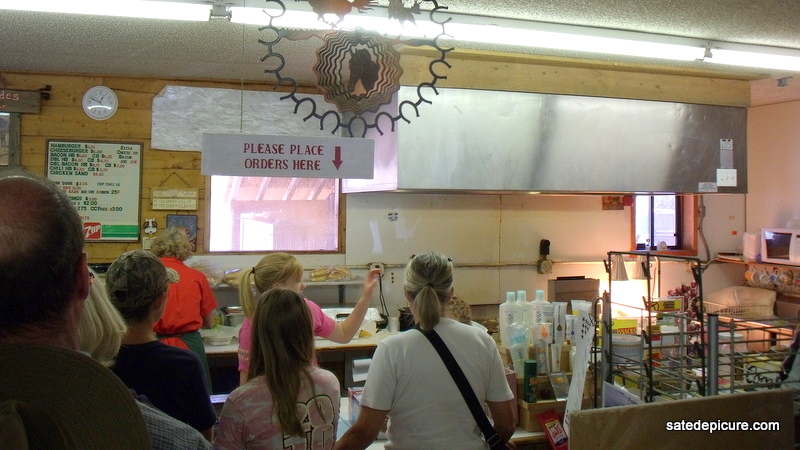
Service Counter

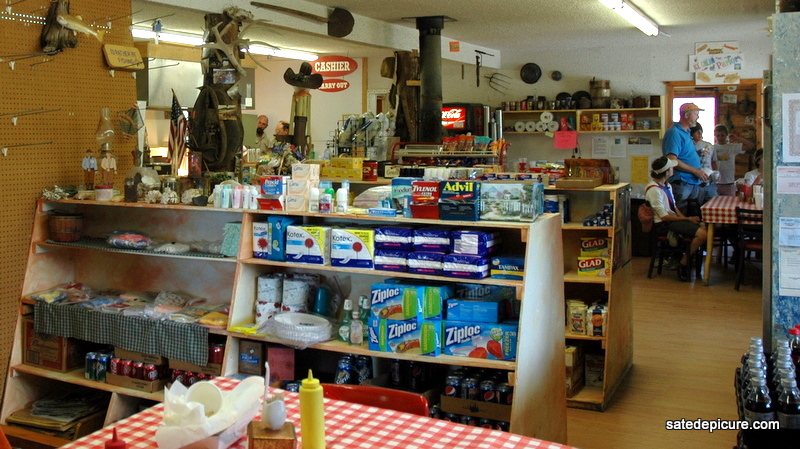
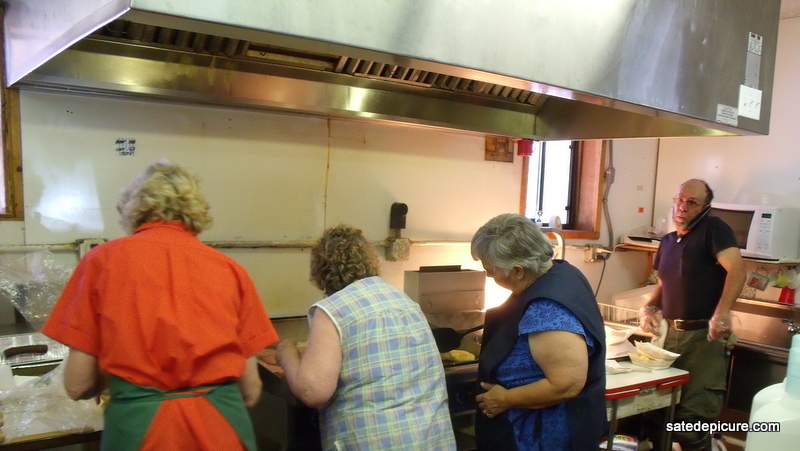
There’s a counter at the far right corner of the general store and behind it a large grill and ventilation hood. Three older women that remind me of my mother work the grill while others take orders at the cash register and coordinate delivery. Several small tables with Formica tops and beat-up chairs are randomly placed in spots where they fit along with a couple picnic tables with red checkered vinyl table cloths. It’s just about noon, all the tables are full and there’s a line at the cash register. We make our way forward and I order a burger with fries, Eve orders the same and we nudge our way through the crowd to a table that has just cleared and sit down.

Short Order Cooks

I look around the store, taking in the room. The décor is completely random and worn with rusted fishing lures, mounted horns and antlers of varying species, old photos and various ephemera and dusty artifacts. Eve is staring at me and smiling still and I realize I am the only one wearing a cowboy hat; Billy’s cowboy hat. The other men are wearing baseball hats; more than one has a John Deere logo on it. Our burgers arrive (the beef is custom ground by Mountain City Meats in Denver) and I take my first bite. It is absolutely delicious. Eve continues to smile as we feast on the burgers while an occasional visitor stops by the table to say hello. Life slows down for a moment and all is right in the world. My burger at Freemon’s is one of the best meals I have ever had, Eve’s smile part of what makes is all so right.

The Best Burger in Southern Colorado

Freemon’s General Store

39354 Colorado 149
Creede, CO 81130-9558
(719) 658-2954

American Mussel Harvesters, North Kingstown, Rhode Island

Posted 05 May 2011 — by S.E.
Category Fine Dining, In Case You Missed It!, Travel, Uncategorized

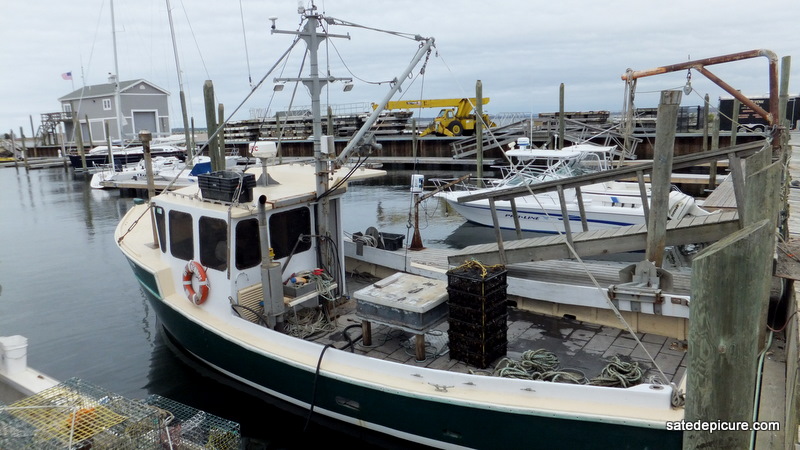
When Bill Silkes approaches me he is smiling and, as a shellfish lover he has much to smile about. Silkes is president of American Mussel Harvesters, Inc., and he’s a fish guy. More specifically, Bill is a shellfish guy whose office window view is the pristine waters of Allen Harbor just off Davisville, Rhode Island. American Mussel Harvesters, Inc., is one of the largest producers of mussels in North America and a major distributor of oysters and clams as well. In addition to farming mussels, oysters, and clams, Silke’s company also markets and distributes nearly three dozen varieties of oysters from the east and west coast of the United States and shellfish from several provinces in Canada. The company is headed toward total sales of over 10,000,000 pounds of shellfish.

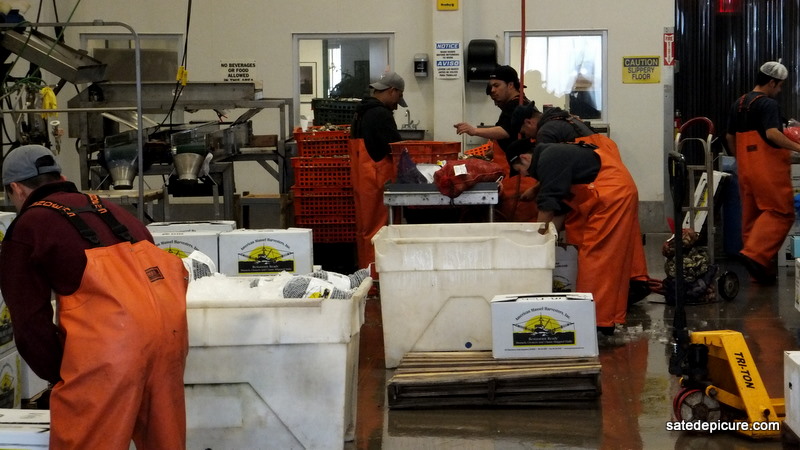
A dozen workers in orange colored rubber overalls are working to pack pallets of oysters and mussels as we tour the cold and damp packing floor. Although the room is chilly, the sweet, clean aroma of fresh shellfish gently touches my nose. I too am a shellfish lover (and a fish guy at heart) and the smell of such pristine, high-quality shellfish is more than enticing; it’s intoxicating. Slikes shows me the massive hydraulic pumps that drive the fresh seawater circulating in the thousand pound totes full of shellfish stacked at one end of the floor. Although American Mussel doesn’t grow every product it sells, it does prep and purge a good portion of its inventory on any given day.

As the oysters and clams sit inside these massive totes full of circulating salt water they filter and purge while gaining strength. Silkes has designed the system so that circulating water passes through a massive ultra-violet sanitizing process assuring that the sterile salt water arriving out the pipe at the top of the system is absolutely free of bacteria. In turn, the shellfish in the totes become happy little buggers, plumping up to peak freshness while purging sand, grit, and trace bacteria prior to being packed and shipped as “restaurant ready” product. The process is brilliant and a perfect example of the food-safety solutions so needed in the global food supply-chain.

Now we are sitting in Silkes conference room with a big pile of fresh shellfish (Raspberry Point Oysters from Canada and Quonset Point Oysters from Rhode Island, mussels and little-neck clams from Narragansett Bay, )

Raspberry Point Oysters, Canada

These meaty, briny, cold water oysters are farmed in the shallows off the rocky coast of Prince Edward Island. It’s not unusual for icebergs broken free from the arctic to float buy in sight of where these oysters are grown and the cold water (along with other factors that Silkes can share) are why it takes 5-7 years for Raspberry Points to grow to market size. They have a beautiful briny flavor with an above-average  saltiness, good density and texture, and an outstanding clean, sweet aftertaste.

Quonset Point Oysters, Rhode Island

The Quonset’s are a bit saltier than the Raspberry Points and have a meatier texture and composition. They grow faster than their cousins from Canada and take just 2-3 years to reach market size. According to Silkes the plankton levels in the bay are high right now and this impacts the flavor and texture of the Quonsets. I guess we came at the right time because the taste  is perfect with an almost crunchy texture they are so fresh.

Little Neck Clams, Narragansett Bay Rhode Island

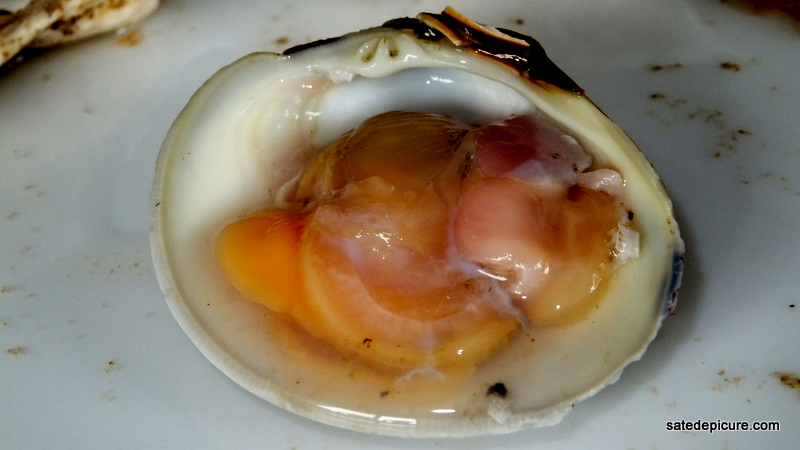
If you are a clam lover, there is nothing like a perfect Narragensett Bay little neck clam that is ice cold and just shucked. The ones I sampled were perfectly pale orange in color, plump, healthy and fresh with a mild saltiness, great clam flavor and minimal iodine aftertaste (which I like by the way). These clams are what put the “Ocean” in Ocean State.

Restaurant Ready Whitewater Mussels, Narragansett Bay, Rhode Island

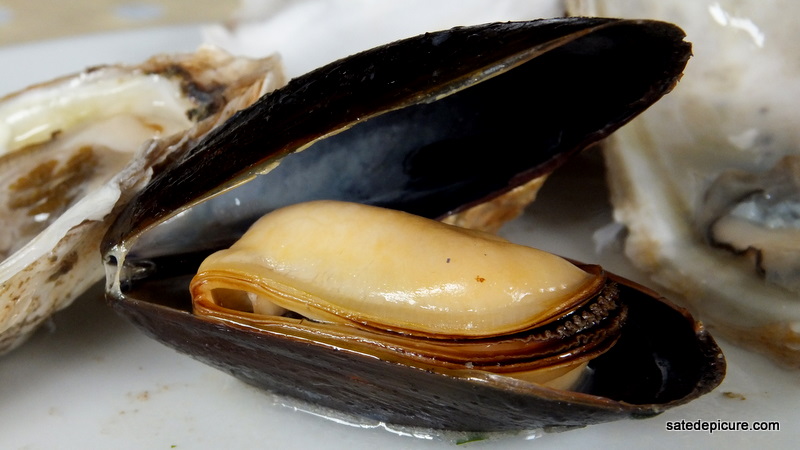
For years I have been spiking the sauces I serve over fish with reduced mussel broth. There is nothing nicer than the rich, deep, seafood flavor of mussel broth when the salt level in the mussels used to make the broth is mild. These Whitewater Mussels were mild in salt, sweet and, like the other products I sampled, distinguished by their ultra-fresh state and perfect flavor. Makes you want to pull this photo off the screen and eat it doesn’t it!

American Mussel Harvesters, Inc.

Salt Water Farms, LLc.

165 Tidal Drive

North Kingstown, Rhode Island 02852


USA

Baccalone: Tasty Salted Pig Parts

Posted 12 Feb 2011 — by S.E.
Category Food Alert Trends, Travel

Salumi

It’s close to noon time and I am running late. A light but steady delicious San Francisco rain is drizzling as I make my way down Market Street through the center of the city. My first visit here was in 1985 and it was raining that day too and each time it rains in this city I am reminded of that first wonderful trip. We made the run from Lake Tahoe in a beat up Chevy Caprice, landed in San Francisco for a series of eating experiences and, later that night, pushed south to Santa Cruz and slept in the car near the beach stomachs full and sated. I ate my way through the city for the first time then, the experience new and electric, and I plan to do it again this time. The sweet San Francisco rain comforts me and gives me life as the Ferry Building comes into view.

Chris Cosentino and Aaron Sanchez

At present, I have less than an hour to get to Chris Cosentino’s Baccalone to try some “Tasty Salted Pig Parts”. As you know from prior blog entries, I really, really love tasty salted pig parts and I love that there’s a retro garde manger movement taking hold in America. Baccalone is a manifestation of this movement as are some of the other examples I have written about like Cochon Butcher in New Orleans and il Mondo Vecchio in Denver. John Kowalski author of the new and outstanding “The Art of Charcuterie” has given further momentum to the movement and provides one of the best explanations of the production of dry, semi-dry, and fermented sausages. That a book of this quality has just been released in 2011 is further evidence of my prediction of the expansion of the art.

As these thoughts cross my mind my mouth starts to water. I have less than an hour before I have to return to the conference I am attending so I pick up the pace while traversing The Embarcadero to the Ferry building marketplace. The Ferry Building is a destination resort for food lovers. You can always tell whether you are in a city dedicated to good food by the types of markets and foodstuffs sold and this building and its farmers market is the center of gravity in San Francisco. Although the Ferry Building is packed with world class restaurants and food boutiques, what attracts me the most is that it is home to CUESA, the “Center for Urban Education about Sustainable Agriculture” and a food with integrity philosophy that more communities should mirror.  Three days per week the building comes to life as the Ferry Plaza Farmers Market, a market full of certified farmers selling local farmstead products, attracts food lovers from across the city.

Salumi

Inside the building, there are multiple shops and food retailers that follow a less stringent set of standards but still carry a tremendous food ethic. Baccalone is one of those shops and as I enter the building, it comes into view directly across the hall to the right of the main entrance. With a large arched storefront leading to a retail space that includes a three door curing cabinet (for those tasty pig parts), chilled case with vacuum packaged terrines, sausages, and pates, and a large display of dry cured sausages wrapped in brown paper, Baccalone has a artisan feel to it. I approach the curing cabinets and peer in. There are nearly a dozen varieties of salumi hanging at 70% humidity and several are dusted white in full bacterial bloom. I take notice of a beautiful batch of Nduja spreadable salami on display and I start to crave a taste. Another case is loaded with tasty little links of Capacollo.

Salumi

To the right of the curing case there’s a large display of additional charcuterie including vacuum packed slabs of pate de Campagna and silky white chunks of Lardo. One of my favorites on display in the case is Cosentino’s Ciccioli terrine. He prepares this classic garlic and rosemary flavored terrine by braising pig parts with skin and fat and pressing them into a mold. The package on display in the store clearly shows layers of pork skin and fat bound in braised meat with natural gelatin. Next to the Ciccioli there’s a fresh Coppa di Testa head cheese and a beautiful Sanguinaccio pork blood sausage. I have to restrain myself from loading up my basket.

Retro Garde Manger

Curious about the dry cured and fermented products on display I pick out a package of Orange and Wild Fennel Salame and a Salame Pepato; dry cured salami with pepper. At the counter I also grab one of Cosentino’s famous mixed salumi cones and devour it while paying for the rest of the items I have picked out.  Time is running out now so I head for the exit smiling with delight. It was a good visit even though it was short. The staff at Baccalone was friendly, knowledgeable, and passionate. The product on display was fantastic and I plan to cut into the two Salame when I get back to my room tonight.

Salumi

Mixed Saumi Cone: A daily snack!


 Salumi

  Orange and Wild Fennel Salame: One per package, firm, lighly sweet, mild salt and very mild orange and fennel notes.


 Salame Pepato: One per package, beautiful fermentation, great deep pork flavor with hints of pepper and spice.

 BOCCALONE SALUMERIA
Ferry Building Marketplace
Shop 21
San Francisco, CA 94111
(415) 433-6500

Breakfast in the Rio Grande National Forest

Posted 10 Jul 2010 — by S.E.
Category Travel


It’s  sunrise and we are awake after a wonderful night of sleep in a cabin located at an altitude of 9000ft just outside of Creede, Colorado. The air is brisk at 55 degrees as we shake off the sleep, head outside into first-light and load up our SUV.  A few minutes later we are bouncing along, kicking up chalky dust as we go, driving southeast along a dirt forest service road, the headwaters of the Rio Grande meandering along to our right, the Rio Grande National Forest and its thousands of Spruce trees passing by gently to our left. Sunlight hasn’t yet crested over the mountains but a soft light is already illuminating the valley. Within an hour we will be eating breakfast at one of the most incredible locations nature can provide. We are guests of a friend who scored us an invitation to a “crack-of-dawn” mountain breakfast in the Rio Grande National Forest that has been happening from time to time in this community for multiple generations. This is a locals only, invitation only, insider event and, from what I hear, they deploy into the mountains with their food and equipment like a finely tuned military unit.  The forest service road comes to an end in a mountain meadow at just under two miles in altitude. I turn and face back down the road amazed at the view; a rolling meadow giving way in the distance to mountain peaks nearly denuded of snow.


Ahead, a small group of cowpokes who arrived earlier have two propane camp stoves lit rendering clouds of steam, the smell of fresh bacon spreading through the air as it cooks. I walk over and introduce myself and find out that these four gents are all summer residents of Creede and three out of four of them are from Texas. Throughout the morning they will cook a dozen pounds of bacon, stoves propped up on a modular wooden table made for just this occasion. As we are talking, a group of women from Louisiana (summer residents too) arrive, set up their own camp stove and, after fifteen minutes or so, begin cooking beignets, lightly dusting the golden brown puffs with powdered sugar as they stack them on plates ready for service.


As the sun rises higher, the air temperature begins to heat up to a comfortable 70 degrees; the sky is crystal clear except for a few small clouds and turning a deep Colorado blue. Another group of women arrives and within moments they are cracking dozens of eggs into a large bowls in preparation for a major scramble. It is obvious that these folks have done this before. I wander over to the edge of the meadow taking it all in and find a stream about four feet wide flowing along at a good clip. The water is ice cold whooshing along and the river full of slippery rocks. The sound of arriving vehicles rises over the rushing water. We are getting closer to ready and more people are arriving.


I head back to the meadow, set up a couple folding chairs and wander over to the table. This is more than a community catered breakfast; it’s also a major potluck event. Bowls of fruit salad, fresh muffins, quick breads, green chili egg casserole (our item), corned beef hash, and crispy home fries have been kindly contributed. The bacon is up, beignets crisp and ready, scrambled eggs just done and on the table; it’s time to eat. We grab plates, get in line and take our time gathering small samples of nearly every item. The hot food is hot, cold food cold, and everything looks delicious. Behind us, the bacon guys cook more bacon, the beignet ladies pump out more crispy morsels, and the scrambled egg station is in full motion. Rounding the end of the buffet table, we head back to our chairs, take a seat and begin to eat, the sound of the stream providing white noise behind us.  As we finish our first round I can feel what little stress left in my body drain away as the sun grows higher.

Lobster is New England Street Food

Posted 05 Apr 2010 — by S.E.
Category Travel

Motif #1

Last weekend I made my way down the narrow streets of Bear Skin Neck in Rockport Massachusetts to my favorite north shore lobster shack. Actually, I have three lobster shacks that I favor on the North Shore; Roy Moore Lobster Company just happened to be the one I was closet to. After record breaking rain the prior week, we were blessed on Sunday Morning with record breaking heat and sun. (Still don’t believe in global warming?) The sun and heat triggered a primeval craving for a walk down Bear Skin Neck that usually, like the lilacs around my house, activates later in the spring. As soon as I think of eating in Rockport, I can’t suppress the anticipation of taking a walk through town after eating for a tour of the wonderful art galleries and shops. Once my summer craving for steamed clams and lobsters starts, it has to be sated. Off to Bearskin Neck we went.

Roy Moore's in Rockport, MA

Legend has it that back in 1700 there was a bear in the village that wandered down to the waters edge and was caught by the rising tide and killed. An alternative tale is that the neck was named after the bear skin that colonial resident John Babson left drying on the neck. For the next three hundred years, the legend as well as the name held fast as did the town itself. After making a cameo appearance in the war of 1812, the port took off in the late 1800’s and early 1900’s due to the high quality of granite that was quarried locally and shipped from the quay all around the world. Granite neck would have been a more fitting name.

Roy Moore’s is a real seafood shanty, it isn’t a fabricated place created in the 1990’s to resemble one. It was founded on the south side of Bear Skin Neck in 1918 while the granite industry was still flourishing. I have been eating lobsters and clams there since the late 1960’s. The building consists of a tiny single story fish shack with faded cedar shingle siding and a giant red wooden lobster sign out front. Inside there are several chilled display cases filled with fish and loaded lobster tanks circulating fresh salt water. Toward the back of the space there’s a small kitchen, a closet really, equipped for steaming lobsters and clams, a double bain-marie for holding hot chowder, and a couple of microwave ovens. There is no bathroom and, except for the half-dozen picnic tables on the back deck, there’s no seating either. It’s not luxury food, the Wampanoag Indians used to use whole lobsters as fertilizer. This is rustic New England street food. Lobster served the way it is supposed to be, simply cooked right out of the tank, cracked, with drawn butter and a napkin on the side. The same way they have cooked lobsters on Bearskin neck for hundreds of years.

An Old Shanty it is

Bearskin neck has been an active fishing port since the late 17th century but today it has tilted toward the tourist trade like most other New England ports. The shops along the neck are true old-school shanties transformed into art galleries, retail shops, restaurants and inns. Although the architecture along the avenue is seaside New England in style, there is no lack of low-end t-shirt and souvenir shops stuffed into these historic spaces. The art galleries are another story and include the work of artists known locally as well as others with global reputations like the late Martin Ahern and John Terelak.

Fitz Hugh Lane, Winslow Homer, Edward Hopper, Paul Manship, Katherine Lane Weems and Walker Hancock all passed through this town during their careers and Manship and Hancock both lived within five miles of town center for most of their lives. Manship is best known for his sculpture of Prometheus that overlooks the ice rink in Rockefeller Center. Hancock is noted for creating one of the most lifelike busts of Robert Frost, now at the Robert Frost library at

The Menu

Amherst, during a series of sittings at his studio in Lanesville in 1950. For more on the history of art in Rockport and on Cape Ann, visit the Rockport Art Association on Main St. It’s worth the trip.

Art galleries and Bearskin Neck go together like steamed lobster and drawn butter. Now that the weather is warming up, take some time and head north to Rockport for some “lobsta and steemas.” Sit out on the back deck and let the ocean air blow over you. Just be sure to get to Roy Moore’s before 5:45PM, that’s when the last lobster drops into the pot before closing.